What Professions Do Freelancers in Germany Actually Register? We Analyzed 4,000+ Registrations from 2025
Peter
Updated on:

When someone decides to become self-employed in Germany, one of the first steps is to register with the Finanzamt (tax office). They describe their profession in their own words—no dropdown menus, no categories to choose from. Just a blank field and whatever they write.
As Germany's largest freelance registration platform, Norman processes thousands of these registrations each year. We analyzed 4,423 registrations from 2025 to answer a simple question: what are people in Germany actually registering as when they go freelance?
The results reveal a workforce that looks quite different from official statistics—one shaped by the creator economy, gig platforms, and a consulting boom spanning everything from life coaching to real estate.
The Full Picture: What Germans Register As
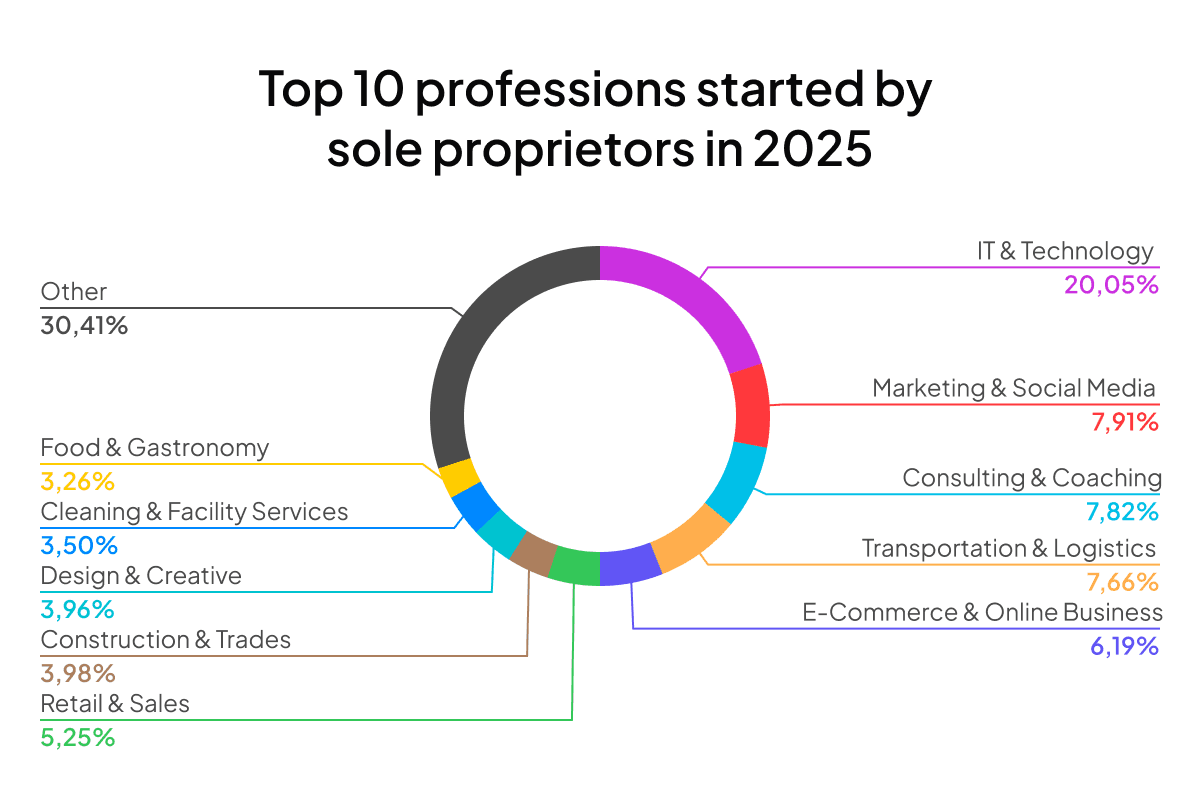
Here's how the 4,423 registrations break down across major categories:
Category | Registrations | Share |
|---|---|---|
IT & Technology | 887 | 20.1% |
Other Services | 551 | 12.5% |
Marketing & Social Media | 350 | 7.9% |
Consulting & Coaching | 346 | 7.8% |
Transportation & Logistics | 339 | 7.7% |
E-Commerce & Online Business | 274 | 6.2% |
Retail & Sales | 232 | 5.2% |
Construction & Trades | 176 | 4.0% |
Design & Creative | 175 | 4.0% |
Cleaning & Facility Services | 155 | 3.5% |
Food & Gastronomy | 144 | 3.3% |
All other categories | 794 | 18.0% |
🏆 IT & Technology dominates at 20.1%—roughly one in five new freelancers works in tech. But the real stories emerge when you look inside the categories.
The creator economy is real: 1 in 3 freelancers in marketing is an influencer
The marketing category tells a fascinating story about how work has changed.
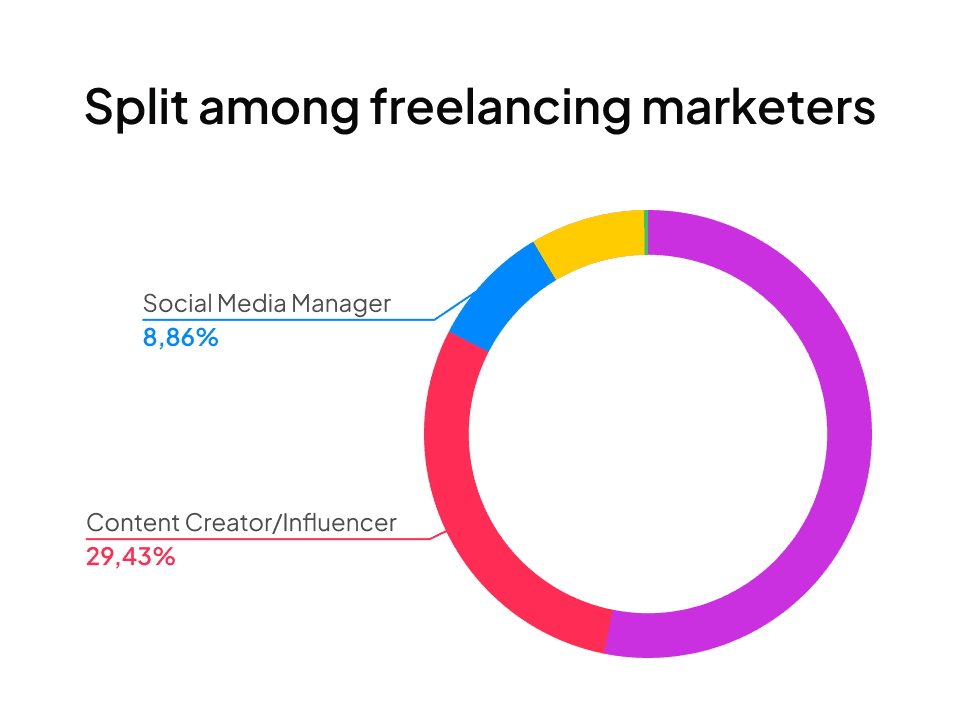
Of the 350 people who registered in Marketing & Social Media:
📣 29.4% registered as Content Creators or Influencers.
That's 103 people—nearly one in three—who listed their profession as some variation of "content creator," "influencer," or "Twitch streamer." Add in the 31 Social Media Managers (8.9% of the category), and over a third of marketing freelancers are building careers on platforms like Instagram, TikTok, YouTube, and Twitch.
The remaining registrations are split between traditional marketing services (53.1%) and digital marketing specialists (8.3%).
The Gig Economy Shows Up: Delivery and Rideshare
Transportation & Logistics accounts for 339 registrations—7.7% of all freelancers. But the breakdown reveals how platform-based gig work has reshaped this sector.
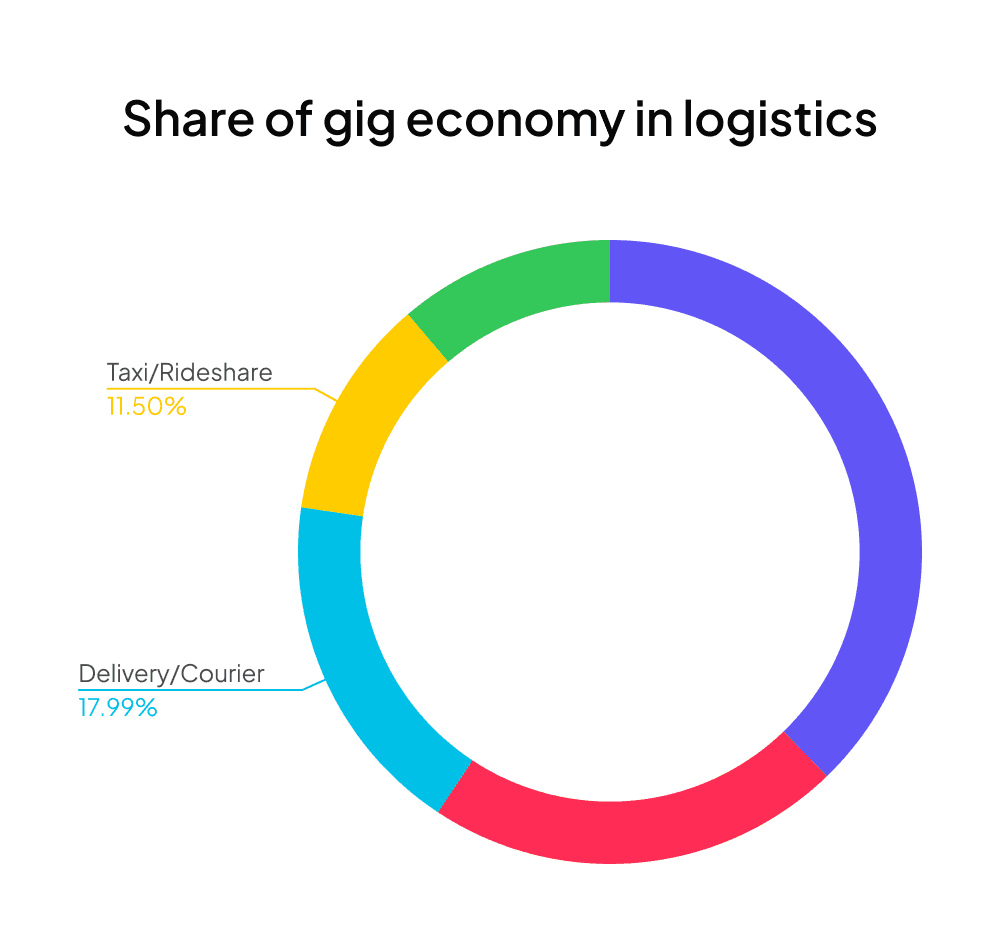
📬 18% registered as Delivery Couriers. That's 61 people working for platforms like Lieferando, Wolt, or similar services.
🚕 11.5% registered as Taxi or Rideshare drivers—39 people working with services like Uber or Bolt, or as independent taxi drivers.
Combined, nearly 30% of transportation freelancers work in app-based gig-economy roles.
The rest work in general transport (37.8%), vehicle transport (21.5%), and logistics/freight (11.2%).
Everyone's a Consultant (And They're All Similar)
Consulting & Coaching represents 346 registrations. What's striking is how evenly distributed the specializations are.
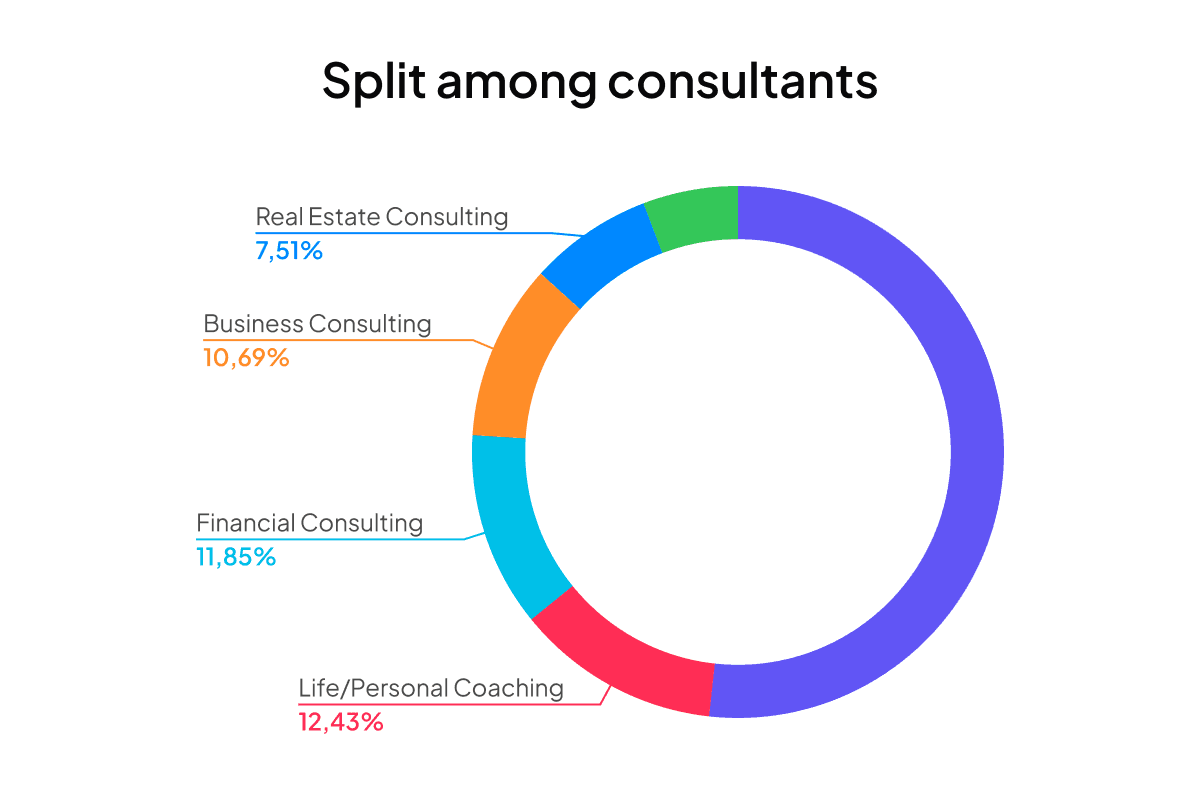
Consulting Type | Share of Category |
|---|---|
Life & Personal Coaching | 12.43% |
Financial Consulting | 11.85% |
Business Consulting | 10.69% |
Real Estate Consulting | 7.51% |
Life coaches, financial consultants, and business consultants all hover around 11-12%—a statistical dead heat. Real estate consulting trails slightly at 7.5%.
The remaining 51.7% registered under general consulting descriptions without specifying a niche.
This clustering suggests that consulting has become a catch-all category for professionals offering expertise-based services across domains.
Dropshipping: 1 in 10 E-Commerce Registrations
E-Commerce & Online Business drew 274 registrations. The vast majority (78.8%) described themselves as running an online shop. But a notable slice is trying the dropshipping model.
📦 10.6% explicitly registered as dropshippers—29 people building businesses that ship products directly from suppliers to customers without holding inventory.
Another 10.6% registered as marketplace sellers, likely operating on platforms like Amazon, eBay, or Etsy.
What This Data Shows
These numbers capture something official statistics often miss: how people describe their own work when no one is guiding their answer.
The data reveals a German freelance economy where:
Tech remains dominant, with one in five registrations in IT & Technology
The creator economy has arrived, with content creators and influencers making up nearly a third of marketing freelancers
Gig platforms have reshaped transportation, with delivery and rideshare accounting for 30% of the category
Consulting has become a universal category, with life coaches as common as financial advisors
New business models are mainstream, with dropshipping representing over 10% of e-commerce registrations
Who is Norman?
Norman is Germany's largest platform for freelance tax registration, helping self-employed register with the Finanzamt and manage their tax obligations.
Ready to register as a freelancer in Germany? Norman makes it simple to register with the Finanzamt in minutes—whether you're a content creator, consultant, developer, or anything in between.
Methodology
This analysis is based on 4,423 freelancer registrations processed through Norman in 2025. When registering for the Finanzamt, users describe their profession in a free-text field. We categorized these descriptions using consistent criteria, excluding 174 entries that were invalid or empty (e.g., "I'm still a student" or incomplete responses).