Deduct Bicycle & E-Bike from Tax in Germany 2026

Diana
Updated on:
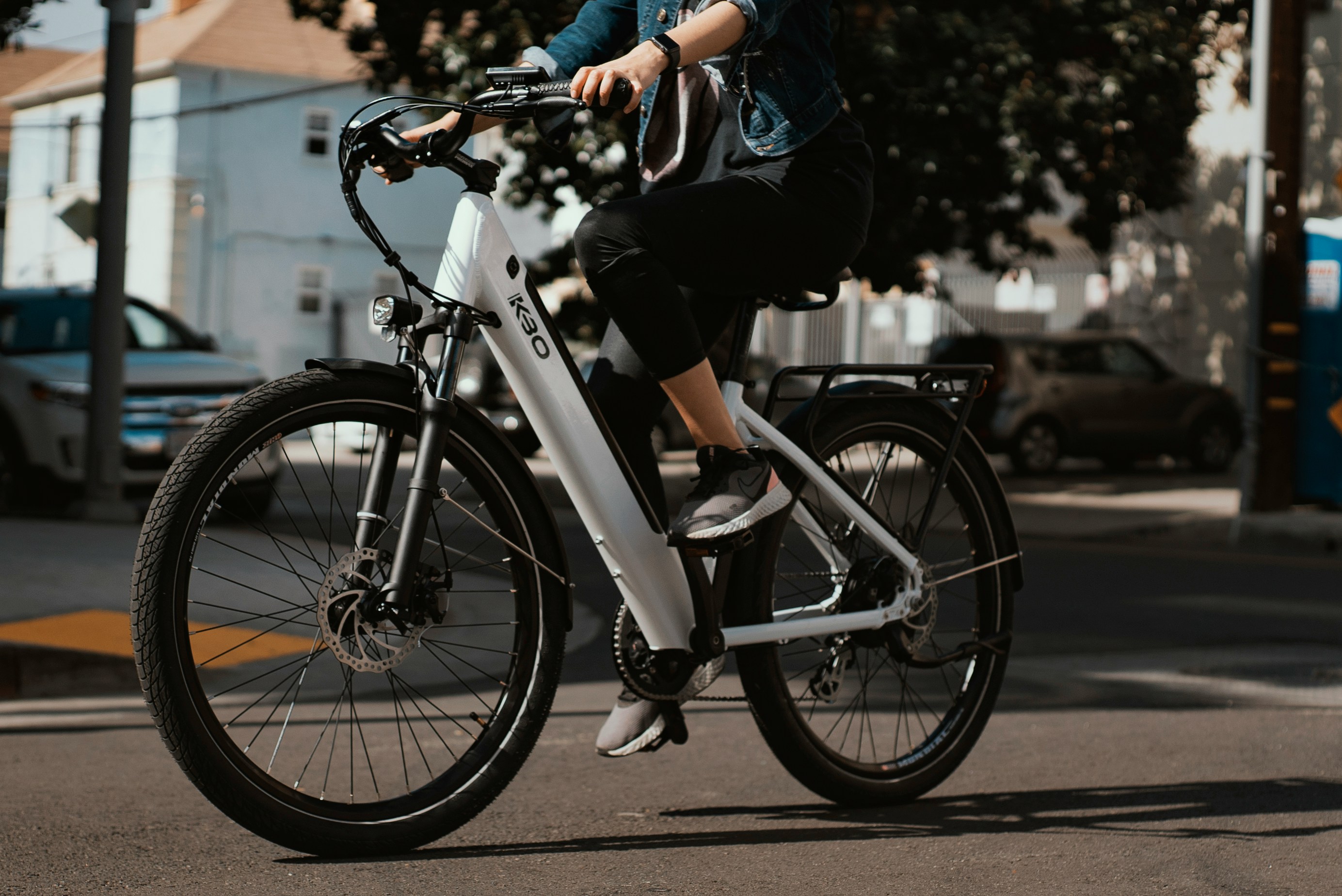
If you ride your bike or e-bike to client meetings, the coworking space, or the post office, you can deduct it as a business expense in Germany. The 2026 rules are unusually generous for cyclists: regular pedelecs don't trigger the 1 % private-use rule that company cars do, and depreciation runs over a manageable 7 years. Done right, this is a few hundred euros back from the tax office every year.
This guide walks you through when a bike becomes business property, how to depreciate it, how the private-use rule works, and whether buying or leasing makes more financial sense.
When can you deduct your bike or e-bike?
The Finanzamt wants to see that the bike is used predominantly for business — more than 50 %. Examples of business use:
Trips to clients, partners, or meetings
Going to the coworking space, your tax advisor, the bank
Picking up materials, post runs, deliveries
Trips to trade fairs, training, workshops
The trip from your home to a "first place of business" doesn't count as business use — it's covered by the commuter allowance (0.30 €/km, 0.38 €/km from km 21). If you work entirely from home, you don't have a first place of business, so all business trips are clearly deductible. For more on the home-office side, the home-office deductibles overview is a good reference.
Sort your bike receipts straight into your books
Norman recognises invoices for bikes, e-bikes, repairs, and accessories automatically and routes them to the right tax category — VAT deduction and depreciation over the asset's useful life included.
Bike, pedelec, or S-pedelec: what counts for tax?
Tax treatment depends on the build. Three categories:
Type | Speed | Tax category |
|---|---|---|
Bike (no motor) | — | Bicycle |
Pedelec / e-bike | Motor assist up to 25 km/h | Bicycle |
S-pedelec | Motor assist up to 45 km/h | Motor vehicle |
This split matters: an S-pedelec is treated like a car, with all that brings — the 1 % rule (or a logbook) for private use, mandatory insurance, moped licence. Normal pedelecs are treated as bicycles for tax purposes. If in doubt, the manual or spec sheet will tell you.
Acquisition cost: deduct immediately or depreciate?
It comes down to the net price:
Up to €800 net: low-value asset (GWG)
If the net price is under €800 (€952 gross), you can write off the bike as a low-value asset (geringwertiges Wirtschaftsgut) — full deduction in the year of purchase. Mostly relevant for simple bikes; most e-bikes cost more.
Over €800 net: depreciation over 7 years
More expensive bikes and e-bikes depreciate linearly over the official useful life of 7 years (per Germany's AfA tables). Divide acquisition cost by 7 — that's your annual deduction.
Example: An e-bike costs €3,500 net (€4,165 gross). You buy it in January 2026.
VAT recovery on purchase: €665 (19 % VAT)
Annual depreciation: €3,500 / 7 = €500 deduction per year
Tax saving at a 35 % marginal rate: about €175 per year, plus €665 VAT recovered in year 1
In the first year, depreciation is calculated month-by-month (pro rata temporis): bought in April means 9/12 of €500 = €375.
Special depreciation under §7g EStG
Small businesses can claim an additional special depreciation of up to 20 % spread across the year of acquisition and the next four. Condition: profit in the previous year under €200,000. This pulls more of the deduction forward — especially attractive in a high-profit year.
Private use: the 0 % rule for pedelecs
Here's the genuinely good news: if you're self-employed and add a bike or pedelec (up to 25 km/h) to your business assets, the private use is tax-free — §3 Nr. 37 EStG, extended through end of 2030. No imputed benefit, no 1 % rule like a company car. For an S-pedelec, however, the 1 % rule on the gross list price per month applies (or you keep a logbook). The practical takeaway: a regular e-bike for business is one of the most tax-friendly assets you can buy as a freelancer.
What else can you deduct? Accessories and running costs
Besides the bike itself, these are deductible business expenses (apportioned to business use if the bike isn't 100 % business):
Battery (replacement or second battery) — usually expensed immediately as a consumable
Repairs, service, inspection — immediate expense
Insurance (theft, liability for S-pedelecs)
Helmet as protective gear — if business necessity is documented
Lock, lights, reflectors
Trailer for hauling materials (think: tradespeople, photographers)
Rain gear — careful here, the Finanzamt suspects private use; argument needs to hold
The basics: keep receipts, categorise cleanly, recover VAT (if you're not on the small-business scheme — see Kleinunternehmer rules). For a fuller picture of typical deductible purchases, the equipment deductibles guide is worth a look.
Buying vs. company-bike leasing
With leasing, you sign a contract with a provider like JobRad, Eleasa, or BusinessBike. Monthly payments are fully deductible, including 19 % VAT. Upsides:
No big upfront investment
Maintenance, insurance, and service often bundled
End of term (usually 36 months): take over the bike at residual value, or upgrade
The 0 % private-use rule for pedelecs still applies
Downsides: over the full term, leasing typically costs more than buying outright. If you have the cash and plan to keep the bike for years, buying is cheaper. For freelancers with cashflow pressure or a short planning horizon, leasing is the smoother option.
Tip: Buying lets you recover the full VAT in year one — a real cashflow boost that leasing doesn't give you. With leasing, VAT comes back month by month with each payment.
Documentation and bookkeeping
To survive an audit, you need:
Purchase invoice — with all required fields (seller, date, net amount, VAT, gross amount)
Asset register — for assets over €800 net, with the depreciation schedule
Evidence of business use — calendar entries, client trips, routes. A logbook isn't required for a pedelec (no 1 % rule), but it's useful if there's ever a dispute
Receipts for ongoing costs — repairs, batteries, insurance
If your accounting software keeps a digital asset register, depreciation runs automatically over the useful life. Doing it manually in Excel is a great way to forget it in year three.
Common mistakes
Use isn't documented. In an audit, you have to show the bike is mainly for business. "Trust me" doesn't cut it.
Mixed receipts. Buying a bike and a birthday present on the same private receipt makes it impossible to separate VAT cleanly. Always insist on separate business invoices.
Misclassifying an S-pedelec. Treating a 45 km/h bike like a pedelec invites back-payments. The mandatory moped plate is a giveaway.
VAT recovery as a small business. Kleinunternehmer can't recover VAT — that significantly cuts the tax benefit. Worth checking whether switching to standard VAT makes economic sense before a big purchase.
Forgetting depreciation. In years 2-7, the deduction tends to vanish from view. Keep a clean asset register.
Bottom line
An e-bike or bike for business is one of the friendliest tax purchases you can make in Germany: no 1 % private-use rule, depreciation over a manageable 7 years, immediate VAT recovery, and low running costs. On a €3,500 e-bike, the tax benefit easily totals over €1,500 across the useful life. The only requirement is clean documentation and the ability to show predominantly business use — both happen almost on autopilot if your bookkeeping is in good shape.