E-Invoicing Software Germany 2026: The 7 Best Tools for XRechnung and ZUGFeRD

Diana
Updated on:
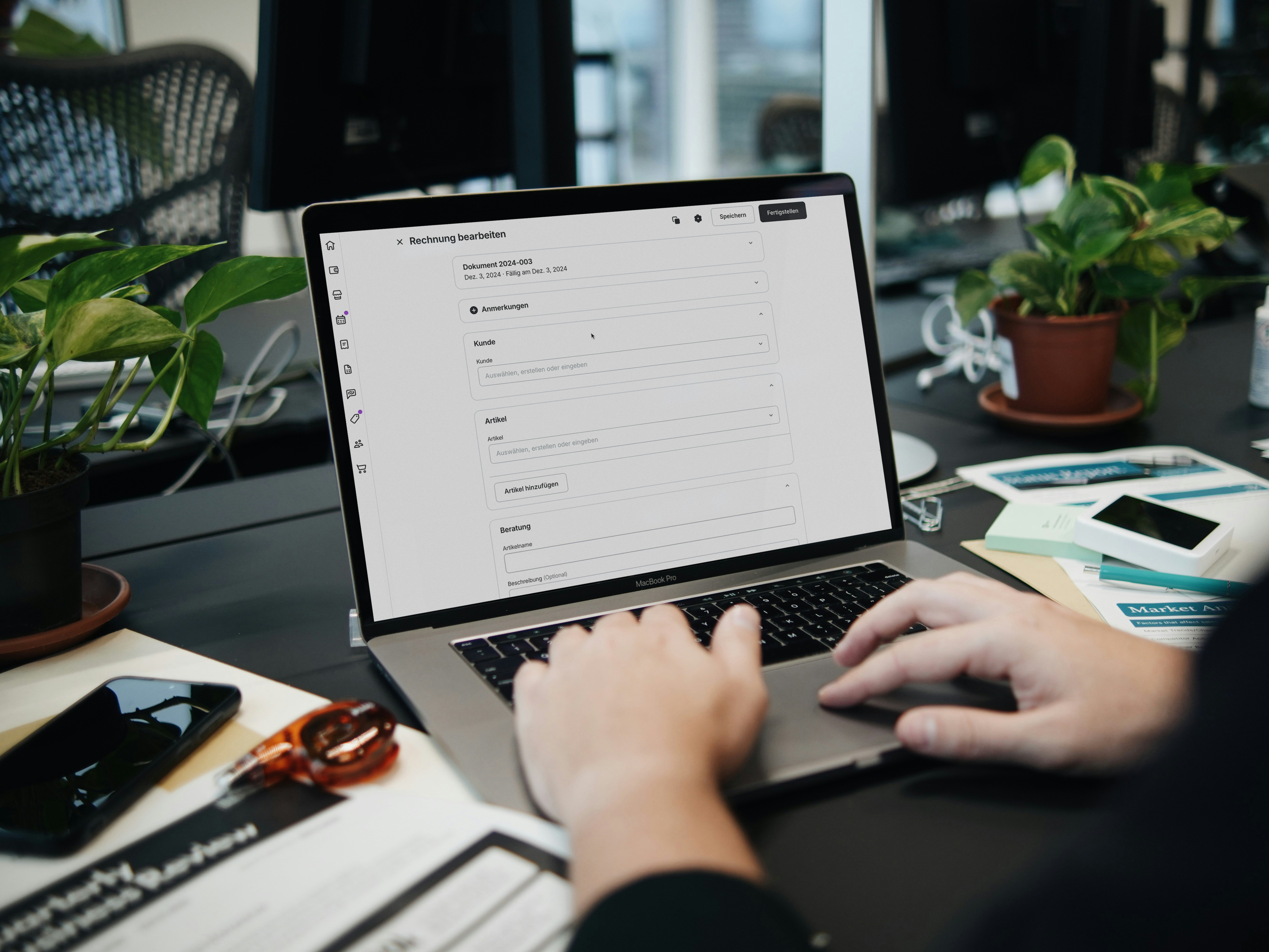
Germany's e-invoicing mandate is already in effect: since January 2025, all German businesses must be able to receive electronic invoices, and the obligation to issue them rolls out in stages through 2028. If you run a business in Germany — as a freelancer, sole trader, or GmbH — you need software that handles XRechnung and ZUGFeRD. This comparison cuts through the noise and shows you the best options.
What Germany's E-Invoicing Mandate Actually Requires
The e-invoicing obligation was introduced by the Wachstumschancengesetz and amends § 14 of the German VAT Act (UStG). Here's the timeline:
1 January 2025: All German businesses must be capable of receiving e-invoices in structured formats.
Through end of 2026: Transition period — paper invoices and PDFs are still allowed for B2B transactions (with recipient consent).
1 January 2027: Mandatory issuance for businesses with prior-year revenue above €800,000.
1 January 2028: Mandatory issuance for all B2B businesses. Legacy EDI formats that don't meet EN 16931 may only be used through end of 2027.
The key point: a standard PDF sent by email doesn't count as an e-invoice under the new rules. Only structured formats compliant with the European standard EN 16931 qualify — that means XRechnung or ZUGFeRD. You need software that creates and processes these formats.
For a full breakdown of the legal deadlines and what applies to your business type, read our guide to the e-invoicing mandate in Germany.
Issue compliant e-invoices for free
Norman handles XRechnung and ZUGFeRD natively — unlimited invoices, no watermarks, no artificial caps. Create a compliant electronic invoice in seconds, with no XML configuration required, and have incoming e-invoices parsed and posted to your books automatically.
What to Look for in E-Invoicing Software
Not all tools that claim "e-invoice support" are equal. These are the features that actually matter:
XRechnung creation: Generates valid XML (UBL or UN/CEFACT CII) compliant with EN 16931.
ZUGFeRD creation: Hybrid PDF/A-3 with embedded XML — both machine-readable and human-readable. Often the more practical format for smaller businesses.
Receiving e-invoices: Parses incoming XRechnung or ZUGFeRD documents and imports them into your accounting.
Peppol network: Increasingly important for public sector clients and cross-border B2B — check whether the tool supports Peppol delivery.
GoBD-compliant archiving: Electronic invoices must be archived in tamper-proof, auditable form under German accounting rules.
Integrated accounting: The ideal setup is one tool covering invoicing, bookkeeping, and VAT returns — not three separate systems you need to sync.
The 7 Best E-Invoicing Tools in Germany (2026)
1. Norman — AI-native invoicing with built-in e-invoice support
Norman is an AI-powered accounting platform that combines invoicing, bookkeeping, and VAT reporting in one product. The invoicing module supports XRechnung and ZUGFeRD natively — select your format, and the software generates a compliant document automatically. Incoming e-invoices are parsed and posted to your books without manual entry.
Pros:
Free to use — unlimited invoices, no watermarks, no artificial limits
XRechnung and ZUGFeRD out of the box
AI-powered categorization of incoming invoices
Fully integrated with bookkeeping and VAT returns
GoBD-compliant archiving included
Cons:
Younger product — some integrations still in development
Focused on smaller businesses and freelancers
Price: Free — unlimited invoices, no watermarks, no artificial caps. XRechnung and ZUGFeRD are included in the free plan.
Best for: Freelancers, sole traders, small GmbHs and UGs who want everything in one tool without paying a monthly fee for the basics.
2. Lexoffice — The market leader with e-invoicing added
Lexoffice (by Haufe) is the most widely used accounting and invoicing software in Germany. E-invoicing support was added progressively — XRechnung and ZUGFeRD are now supported. The interface is mature and familiar to many German business owners.
Pros:
Very well known — extensive documentation and community
DATEV export for tax advisors
Wide integrations (e-commerce, banking)
Cons:
More expensive than alternatives at the entry level
Full e-invoice functionality requires higher-tier plans
Interface can feel dated in places
Price (2026): Package S from €6.90/month (receipt management), M €11.90/month (invoicing), L €19.90/month (bookkeeping + VAT return). XRechnung as an outgoing format is tied to the higher tiers — the entry package S is not enough. All prices are net.
Best for: Businesses already using Lexware Office or those who need DATEV compatibility.
See our detailed head-to-head on the Norman vs. Lexoffice comparison page.
3. sevDesk — Accounting and e-invoicing combined
sevDesk is one of Germany's most popular accounting platforms for freelancers and small businesses. Its e-invoicing features were significantly expanded in 2024–2025 — XRechnung and ZUGFeRD are both generated and processed.
Pros:
Good combination of invoicing and full bookkeeping
Tax advisor access included
Extensive documentation and support
Cons:
Prices have increased significantly in recent years
Some users report bugs after updates
No free tier
Price (monthly billing, 2026): Free tier (up to 3 invoices/month), "Rechnung" plan €12.90/month, "Buchhaltung" €25.90/month, "Buchhaltung Pro" €34.90/month (all net). Annual billing is significantly cheaper.
Best for: Freelancers and small teams who want an established, full-featured solution.
4. FastBill — Simple invoicing, limited e-invoice depth
FastBill markets itself as a simple, automated invoicing tool. E-invoicing features have been added, but they are less deeply integrated than in dedicated accounting platforms.
Pros:
Very easy to use
Automatic receipt capture via mobile app
Good value for beginners
Cons:
E-invoicing features comparatively limited
Full bookkeeping only on higher plans
No direct VAT return filing
Price (monthly billing, 2026): Solo €10/month, Plus €15/month, Pro €30/month, Premium from €59/month. Annual billing comes with roughly 10 % off.
Best for: Freelancers with low invoice volumes who want a simple tool.
5. Billomat — Flexible for growing businesses
Billomat (now part of the Haufe group) is an invoicing platform with strong API access and customization options. E-invoicing formats are supported, though setup requires more configuration effort than simpler tools.
Pros:
Good API for custom integrations
Scales well for growing teams
Broad e-commerce and payment integrations
Cons:
More setup effort than leaner tools
Not the best value for solo freelancers
Price (monthly billing, 2026): Professional €29/month, Business €39/month, Enterprise €199/month. Annual billing with around 20 % discount.
Best for: Businesses that need custom workflows and API access.
6. Papierkram — Lean and focused
Papierkram is a streamlined invoicing tool aimed at freelancers. The app is clean and quick to learn. Importantly, XRechnung and ZUGFeRD are included in the smallest paid plan — no need to upgrade for basic e-invoice compliance.
Pros:
Very clean, easy interface
XRechnung and ZUGFeRD already in the entry tier
Works well for Kleinunternehmer and freelancers
Free tier for getting started (no e-invoicing)
Cons:
Fewer bookkeeping and automation features than Norman or sevDesk
No direct VAT return filing
Not suitable for GmbH or more complex structures
Price (2026): Free tier (without e-invoicing), Plan S €12.90/month (with XRechnung and ZUGFeRD), Plan M €24.90/month monthly or €19.90/month on annual billing. Annual billing comes with 20 % off across all paid tiers.
Best for: Freelancers and small sole traders with simple needs.
7. Invoicefetcher — Specialist for receiving e-invoices
Invoicefetcher is not a full accounting platform — it's a specialist tool for receiving, parsing, and routing incoming e-invoices, including via the Peppol network. It's a useful add-on if you receive large volumes of e-invoices from multiple sources and want to forward them to an existing accounting system.
Pros:
Strong focus on e-invoice receipt and processing
Peppol support
API integration with major accounting systems
Cons:
Not a standalone accounting tool — you still need a second system for outgoing invoices
Higher price for specialized functionality
Price (2026): Free tier (fetches from 2 portals), paid tiers up to €29.99/month.
Best for: Companies with high incoming e-invoice volumes that already have an accounting system.
Quick Comparison Table
Tool | XRechnung | ZUGFeRD | Peppol | Full Accounting | Price from |
|---|---|---|---|---|---|
Norman | Yes | Yes | Planned | Yes | Free |
Lexware Office | Yes (XL tier) | Yes | Limited | Yes | from €6.90/mo (S) |
sevDesk | Yes | Yes | Partial | Yes | from €12.90/mo |
FastBill | Yes | Limited | No | Partial | from €10/mo |
Billomat | Yes | Yes | No | Yes | from €29/mo |
Papierkram | Yes | Yes | No | Limited | from €12.90/mo |
Invoicefetcher | Yes | Yes | Yes | No | Free + up to €29.99/mo |
Prices and features change frequently. Always verify current plans on each provider's website.
Which Tool Is Right for You?
Freelancers and sole traders with manageable invoice volumes: Norman. It's free — unlimited invoices, no watermarks, XRechnung and ZUGFeRD included. Bookkeeping and VAT returns come built in, so you don't need a second tool and don't pay anything for the basics. If you prefer a standalone invoicing app with a leaner interface, Papierkram is a solid pick. See the freelancer overview for what Norman covers in this segment.
Small GmbHs and UGs: Norman or sevDesk. Both handle double-entry bookkeeping, e-invoicing, and tax advisor access. Norman offers AI-driven automation and is free for core features; sevDesk is more established with deeper documentation.
Growing SMEs with integration requirements: Billomat or Lexoffice — both offer solid APIs and connect to e-commerce platforms and ERP systems.
High incoming e-invoice volumes from many sources: Invoicefetcher as a complement to your existing accounting system, especially if it lacks native Peppol receiving.
Frequently Asked Questions
Does a PDF by email still count as a valid invoice in Germany?
For new B2B invoices from 2025 onward: effectively no, if you need your business partner to claim VAT input tax. A PDF is not a structured e-invoice under EN 16931. Transition periods apply for issuing e-invoices (2027/2028), but you must be able to receive them from January 2025.
What's the difference between XRechnung and ZUGFeRD?
XRechnung is pure XML — machine-readable only, not something a person can read directly. ZUGFeRD is a hybrid: a PDF with XML embedded inside, readable by both humans and machines. For most small businesses, ZUGFeRD is more practical. We explain the full difference between XRechnung and ZUGFeRD in a dedicated article.
Are Kleinunternehmer (small business owners) exempt from the e-invoicing mandate?
Partially yes. Thanks to the Jahressteuergesetz 2024 and § 34a UStDV, Kleinunternehmer under § 19 UStG are permanently exempt from issuing e-invoices — they can keep sending paper or PDF invoices (with recipient consent). But they must still be able to receive e-invoices from 1 January 2025 onward. If a Kleinunternehmer switches to standard VAT taxation, the regular issuing obligation kicks in immediately.
What happens if I don't have e-invoicing software in time?
Once the issuing mandate kicks in (2027/2028), non-compliant invoices may be treated as formally deficient for VAT purposes, creating issues during tax audits and for your customers' input tax claims. The earlier you get the right tool, the fewer headaches later.
Bottom Line: Get the Right E-Invoicing Software Now
Germany's e-invoicing mandate is already running. Choosing the right software now means you meet every deadline without scrambling, keep your bookkeeping clean, and give your customers what they need. For most freelancers and small businesses, the best choice is a single tool that handles e-invoicing, bookkeeping, and VAT reporting together — rather than patching three separate systems. Start with what covers the basics well, and upgrade as you grow.